

Stanley Village History
A Short History of Stanley Village
Stanley Village, nestled in the gentle countryside of Derbyshire, England, is a place shaped by centuries of rural tradition and quiet resilience. It is conveniently close to the Derbyshire Peak District. Its story, like many English villages, is one of gradual evolution—marked by ancient roots, agricultural rhythms, natural resources and the subtle but persistent influence of nearby towns and cities. Stanley village lies about halfway between Derby and Ilkeston on the road from Oakwood. Stanley is a parish of two sections, with Stanley Village and Stanley Common separated by a mile of farmland.
Early History
Stanley’s earliest days reach back to the mists of the Anglo-Saxon period. The name “Stanley” derives from Old English, typically interpreted as “stony clearing” or “stony field.” This etymology hints at the nature of the landscape encountered by early settlers: a rugged, rural terrain thick with woodland and traversed by ancient pathways. Archaeological discoveries in the wider Derbyshire area suggest that the region was inhabited long before the Norman Conquest, with evidence of Bronze and Iron Age activity.
The first written record of Stanley appears in the Domesday Book of 1086, commissioned by William the Conqueror. The survey lists Stanley as part of the landholdings of Henry de Ferrers, a prominent Norman lord, and notes its agricultural value—sheep farming, pastures, and arable land were the lifeblood of the local economy.
Medieval Life and the Manor
During the medieval period, Stanley was organized around the manorial system, which structured English rural life for centuries. The lord of the manor, often resident in the nearby manor house, oversaw agricultural production, collected rents, and held court for local disputes. Villagers worked as tenant farmers, labourers, and craftsmen, sustaining themselves through hard toil and cooperation.
The parish church, dedicated to St. Andrew, has stood at the heart of village life for generations. There is evidence of a church on this site dating from at least the 12th century. A small round-headed Norman priest door in the south wall, now filled in, is evidence of the age of the church. Though the church was restored and partially rebuilt in 1875, it is believed to occupy the site of an earlier medieval chapel. The churchyard, shaded by ancient yews, holds centuries of local history in its weathered gravestones.
Changes Through the Early Modern Period
As the centuries turned, Stanley experienced the slow transformation characteristic of rural England. The enclosure movement of the 18th century altered the village’s agricultural landscape. Common lands were divided and enclosed by hedgerows, changing both the appearance of the countryside and the daily lives of villagers. Farming became more efficient but also more commercial, and traditional communal practices began to fade.
Stanley’s proximity to the industrious city of Derby meant that it was not entirely insulated from the wider economic changes sweeping England. The growth of local industries—particularly coal mining and textiles—offered alternative employment for villagers. Many families found themselves balancing agricultural work with shifts in nearby pits or mills.
Coal Mining and the 20th Century
The Victorian era brought new amenities and a renewed sense of community spirit. Stanley’s population grew, prompting the construction of new homes, schools, and public houses. The Stanley Common, once an expanse of open land, became a centre for village gatherings and events.
Coal mining, in particular, left its mark on the landscape and social fabric of the area. Although Stanley was never a mining centre on the scale of some Derbyshire villages, the nearby collieries provided employment for many residents. The rhythms of the working week, punctuated by chapel on Sundays and gatherings at the local inn, shaped village life well into the 20th century.

The world wars touched Stanley deeply. Young men left for battlefields far from home, and the village, like countless others, mourned those who did not return. The names inscribed on the village war memorial are a testament to the enduring bonds of community and memory.
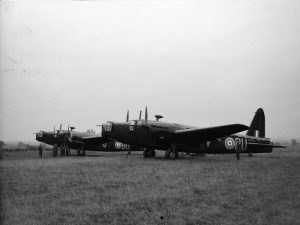
In July 1942 an experimental Wellington bomber plane broke in two with its wreckage scattered over a wide area from Ockbrook to Stanley Common centred on Quarry Farm, Stanley. The plane was an experimental high-flying aircraft and was at between 35,000 – 40,000 feet when a piece of the propeller broke off and fatally injured the pilot causing loss of control and the subsequent crash, very close to Dale Road, Stanley.
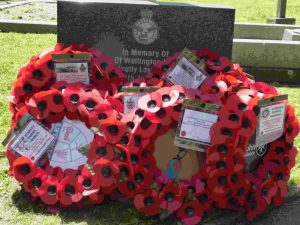
The plane was not only pioneering high altitude flying using a pressurised cabin but also doing top secret trials of the Oboe Radar System, flying from RAF Boscombe Down, Wiltshire. All five crew were killed. A Memorial to the crew erected in the Parish Churchyard was dedicated on Sunday 11 July 2004, attended by 39 relatives of the crew and a Commemoration Service takes place in July each year in their memory.
Stanley Village Today

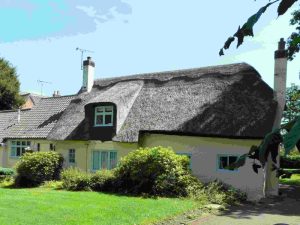
Today, Stanley retains much of its rural charm while embracing the changes of the modern age. The village’s traditional cottages, leafy lanes, and pastoral views remain, but new housing developments and improved transport links have brought fresh faces and energy.
The White Hart and Bridge Inns were originally converted from old cottages. The White Hart at one period was virtually a hunting lodge for the Earl of Harrington of Elvaston Castle who spent time and money with locals. The Bridge Inn is now a private dwelling again.
Community life thrives around the village hall and local clubs. Annual events—fetes, fairs, and the much-loved Stanley Scarecrow Festival—bring residents together in celebration of tradition and creativity. The church continues its centuries-old role as a place of gathering and reflection.
While agriculture is no longer the primary employer, Stanley’s fields and hedgerows still shape its identity. Many residents commute to Derby or other nearby towns for work, but the village’s core character endures—a place where history is woven into everyday life, and where the gentle pace of the countryside offers respite from the modern world.
More Information Links
This short history includes extracts from:
used with the kind permission of the copyright owners.